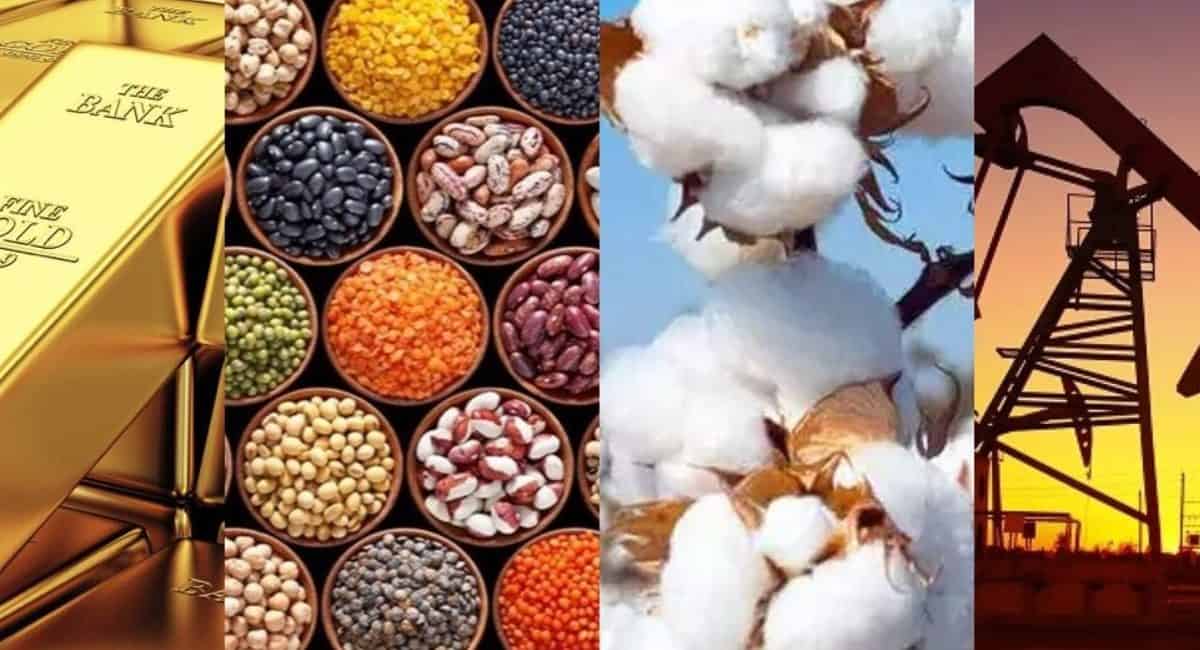
UN Trade and Development draws a specific line for what counts as commodity dependence: a country earning more than 60% of its merchandise export revenue from commodities. By that measure, two-thirds of developing economies, 95 out of 143, were still commodity dependent between 2021 and 2023. The more useful number sits inside that headline: a small set of countries has actually crossed the threshold in the other direction, and the record of how they did it is more specific than the general prescription to “diversify” usually gets credit for.
60% Is the Line UNCTAD Draws
Two countries are named explicitly in the 2025 edition of UNCTAD’s biennial report as having crossed out of commodity dependence in the most recent measurement period: Indonesia and Guatemala both reduced their commodity-export share below 60%, through what the report describes as a combination of targeted policy, strategic investment, and expanded market access rather than any single reform. That’s a narrow list. The total number of commodity-dependent countries in UNCTAD’s full 195-member dataset fell only slightly, from 106 to 103, across the same decade-long comparison window.
A Four-Pillar Economy Built From Sugar
The longer-run case study is Mauritius, and it predates the current UNCTAD reporting period by decades. At independence in 1968, sugar accounted for roughly 30% of Mauritius’s GDP and 90% of its export value, a textbook single-commodity economy. An export-processing zone was built around textiles and clothing and took off through the 1980s, and manufacturing’s share of GDP climbed from 4.5% in 1982 to 11.6% by 1986, matching what sugar itself contributed. Tourism and financial services expanded through the 1990s on top of that, and by the end of the decade Mauritius had what its own government and outside reviewers routinely describe as a four-pillar economy: sugar, textiles, tourism, and financial services, with no single sector able to define the country’s fortunes the way sugar once did.
The sequencing matters more than the sector choice. Manufacturing didn’t replace sugar overnight, and it didn’t wait for sugar to collapse first. The two ran in parallel for most of a decade, with the new sector scaling up while the old one was still the largest employer, which is the opposite of the boom-bust pattern that shows up when a country waits for a resource crisis to force diversification.
Both of those transitions, Indonesia’s and Guatemala’s crossing of a measured threshold, Mauritius’s decades-long build-out of parallel sectors, are the kind of outcome a resource-rich economy staying rich for a generation and then not staying rich at all was built to avoid. Neither happened by accident, and neither happened fast.
Chile Has Strong Institutions and 58% Copper Exports
Chile complicates the picture in a useful way, because it’s frequently cited as a model of resource governance without having actually diversified its export base. Copper contributes roughly 13.6% of Chile’s GDP and 58% of its export value, figures that have held in that range for years despite a well-regarded public copper company, a sovereign stabilization mechanism, and decades of praise for macroeconomic management. Chile has pushed into lithium, forestry, and agricultural exports alongside copper, and that mix has added resilience against any single price shock. It has not reduced the country’s dependence on mining as a share of what it sells abroad.
The distinction is worth sitting with: good institutions around a commodity are not the same policy problem as reducing reliance on the commodity itself. Chile solved the first problem decades ago. The second one remains open, and the export data says so more plainly than any assessment of the country’s governance would.
Middle and West Africa Stayed Above 80%
The aggregate picture explains why the list of successful diversifiers stays short. In Middle and Western Africa, most countries still earn more than 80% of export revenue from primary commodities, a concentration level UNCTAD’s own report flags as among the most severe of any sub-region it measured, alongside comparable patterns in Central Asia and South America. Africa’s total commodity export earnings were reduced by more than $25 billion over the decade UNCTAD tracked, driven largely by lower energy export volumes from the continent’s leading oil exporters, Nigeria, Angola, and Algeria. That’s a decline in commodity revenue, not a rotation toward other sectors, which is the distinction that separates a Mauritius-style transition from a country simply having a worse year in the commodity it already depends on.
The countries that crossed UNCTAD’s threshold and the regions that remain furthest from it aren’t separated by resource endowment. Indonesia and Guatemala have commodities to export same as anyone; Mauritius had almost nothing to work with beyond sugarcane and a captive colonial-era market. What separates them is whether a second sector was deliberately built in parallel, before the first one needed rescuing.